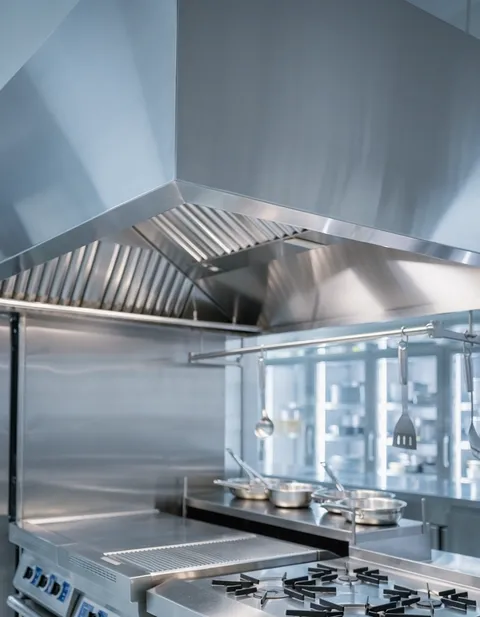




Commercial Kitchen Odor Control & Exhaust Cleaning
If cooking smells are drifting into your dining room or the business next door, the cause is almost always your exhaust system. This is not an air-freshener problem. When grease loads up on filters, in the ducts, and on the rooftop fan, the system pulls less air, so smoke and odor that should be drawn outside instead linger and spill into your space. The fix is to clean the system back to bare metal so it can move air the way it was designed to. Below is why odors happen, why masking them fails, and how exhaust cleaning solves it at the source.
Why Cooking Odors Escape the Kitchen
A healthy exhaust system captures odor and smoke at the hood and carries them up and out through the upblast fan. Odor escaping into the dining room means the airflow has broken down somewhere. The usual culprits:
- Grease-saturated filters: clogged baffle filters choke the pull right at the hood, so smoke and odor roll out into the kitchen and beyond instead of being drawn up.
- Grease-coated ductwork: a narrowed, grease-lined duct moves less air and holds onto old grease that goes rancid, feeding a stale smell back into the building.
- A grease-loaded exhaust fan: heavy grease throws the exhaust fan on your roof out of balance and cuts how much air it pulls, weakening the whole system's draw.
- Rancid grease and bacterial growth: old grease in a neglected system fosters bacterial growth and produces the sour, unpleasant odor that drives guests away. That is a health-inspection concern, not a comfort one.
Important Note: odor leaking into a neighboring business is more than an annoyance. In a shared plaza it is a common source of complaints and can put you crosswise with your landlord or your neighbors. The airflow problem behind it is the same one that raises your fire risk, so fixing the smell and fixing the hazard are the same job.
Why Masking the Smell Does Not Work
It is tempting to reach for ozone machines, sprays, or stronger air fresheners. Those cover the symptom for an hour and leave the cause untouched. As long as the system is grease-loaded and under-pulling, the odor keeps being generated and keeps escaping. A weak exhaust system also traps heat in the kitchen, raises your energy bills, and shortens equipment life. The same grease producing the smell is the fuel behind nearly one in three restaurant fires. Masking the odor leaves all of that in place.
How Exhaust Cleaning Fixes Odor at the Source
Restoring airflow means cleaning the whole grease path so the system can breathe again. A full commercial kitchen hood cleaning addresses every link in the chain:
- Clean or exchange the filters: clean UL 1046-listed baffle filters restore the pull right at the hood, the first place odor escapes.
- Degrease the plenum and ducts: scraping the plenum and ductwork to bare metal removes the rancid grease producing the smell and widens the path so air moves freely.
- Clean the exhaust fan: hot-washing the rooftop fan blades and housing and checking belt tension restores the fan's draw so it actually pulls odor out of the building.
- Verify the airflow: with the system clean, the exhaust pulls smoke and odor up and out the way it was designed to, instead of letting it settle in your dining room.
Why Treasure Coast Kitchens Fight Odor Harder
Our climate makes the odor problem worse. The long, humid summers and heavy rain around Port St. Lucie keep grease tacky and slow to dry, so it builds up faster and turns rancid sooner than it would in a drier region. Salt air off the Indian River Lagoon corrodes the upblast fan's hardware, which weakens its pull over time and lets odor linger. Kitchens packed into shared plazas feel it most, where one tenant's smell becomes everyone's problem. That is why staying ahead of the buildup matters.
If smells are escaping your kitchen, the fastest way to fix it is to find out where the airflow is breaking down. Get in touch for a free assessment and we will measure your grease depth, check your fan's pull, and tell you exactly what it will take to clear the air and keep it clear.
More Hood Cleaning Guides
- How Much Does Commercial Hood Cleaning Cost in Port St. Lucie?
- What to Look for in a Certified Hood Cleaning Company in Florida
- Affordable Restaurant Exhaust Cleaning Services Near Me
- All hood cleaning resources