

What Happens During a Professional Commercial Hood Cleaning?
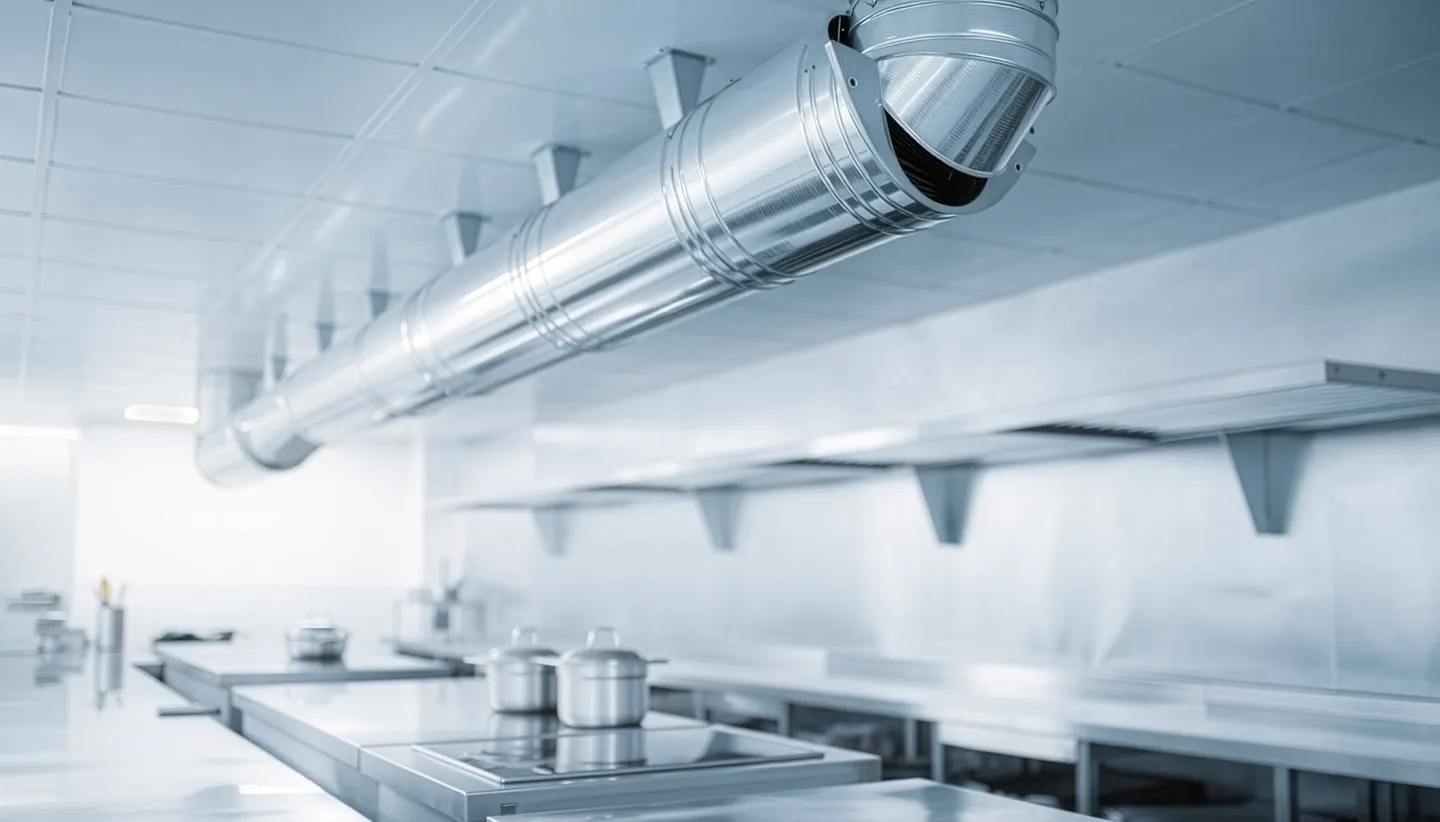
A professional hood cleaning is a full-system, bare-metal scrub of your entire grease path. That means the hood canopy, baffle filters, plenum, ductwork, and rooftop fan, followed by documentation for your compliance file. A typical service runs a few hours, usually after close so your line is cold and out of the way. The whole job is built around two things. Get every accessible surface down to the metal, and contain the mess so your kitchen is ready to cook the next morning. Here is exactly what happens, step by step.
Before the Work: Assessment and Setup
A proper cleaning does not start with a hose. It starts with measuring what is actually there and protecting everything that should stay dry:
- Grease-depth assessment: the technician inspects from the hood canopy to the exhaust fan and measures grease depth with a gauge against the NFPA 96 thresholds, so the job is based on your system's real condition, not a guess.
- Equipment protection: the cook line, controls, and surrounding surfaces are covered with plastic sheeting, and the floor is tarped and bermed so wash water and grease runoff are caught, not spread across your kitchen.
The Seven-Step Cleaning Process
With everything protected, the technician works through the full grease path. The order matters. Work moves top-down and back-to-front, because grease drips downward and you do not want to re-dirty a surface you have already cleaned:
- Hood canopy: the interior and underside of the hood are sprayed with a caustic degreaser, given dwell time, then hand-scraped and hot-washed clean of grease.
- Filters: the baffle filters are removed and soaked in degreasing solution, then scrubbed and rinsed until light passes through the channels.
- Plenum: the air-collection chamber behind the filters, a major grease trap that cosmetic cleanings skip, is fully degreased.
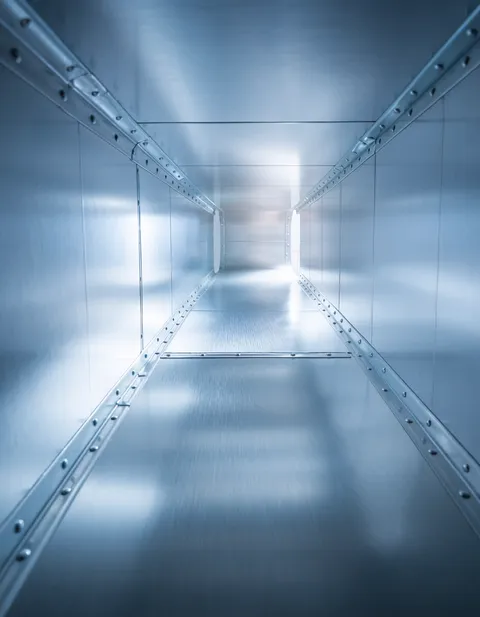
- Ductwork: access panels are opened and the horizontal and vertical duct runs and every direction change are scraped and washed to bare metal. Panels are added where runs cannot otherwise be reached.
- Exhaust fan: with power locked out, the rooftop fan is tilted back on its hinge kit, and the blades and housing are hot-washed. Belt tension is checked.
- Rooftop grease path: the area the fan discharges onto is cleaned, and grease containment around the fan is checked so discharge does not reach the roof membrane.
- Restore and inspect: filters and access panels go back to operational condition, and louvers and dampers are checked before the system is buttoned up.
Important Note: "bare metal" is the benchmark that separates a code-compliant cleaning from a cosmetic wipe-down. Every accessible surface inside the hood, plenum, and duct is scraped and washed down to the metal, never wiped to merely look clean. That is the standard NFPA 96 inspections are measured against.
How the Mess Is Contained
A common worry is that hood cleaning leaves a wrecked kitchen behind. Done professionally, it does not. Containment is part of the job, not an afterthought:
- Plastic sheeting and floor tarps channel all runoff into a contained collection point instead of across your floors and onto equipment.
- Caustic degreaser and grease-laden wash water are collected and disposed of properly, never poured down a drain, where grease solidifies and clogs plumbing.
- Covered surfaces are uncovered and the work area is wiped down before the crew leaves, so the kitchen is ready for service.
What You Get When It Is Done
The work is only half the value. The proof is the other half. After a compliant cleaning you receive a documentation packet your fire marshal, health inspector, and insurance carrier will want to see:
- A dated service sticker: affixed to the hood showing the service date and provider, which inspectors look for first.
- Before and after photos: visual proof the system was given a full clean, not a wipe-down.
- A written report: documenting the work and flagging any areas that could not be reached, so you know where access (a new panel or hinge kit) is needed.
That packet is what clears an inspection without drama, especially here, where a single countywide fire district inspects every kitchen from Port St. Lucie outward and expects a dated certificate posted on your hood. A complete commercial kitchen hood cleaning like the one above typically starts around a $400 to $600 minimum, scaling with system size, grease load, and fan access.
If you have never seen your system stripped down to the metal, or you are not sure your last "cleaning" went past the filters, we are happy to walk you through it. Get in touch for a free assessment and we will measure your grease depth and show you exactly what your system needs.
More Hood Cleaning Guides
- Commercial Kitchen Odor Control & Exhaust Cleaning | PSL
- How Much Does Commercial Hood Cleaning Cost in Port St. Lucie?
- What to Look for in a Certified Hood Cleaning Company in Florida
- All hood cleaning resources